National Sports
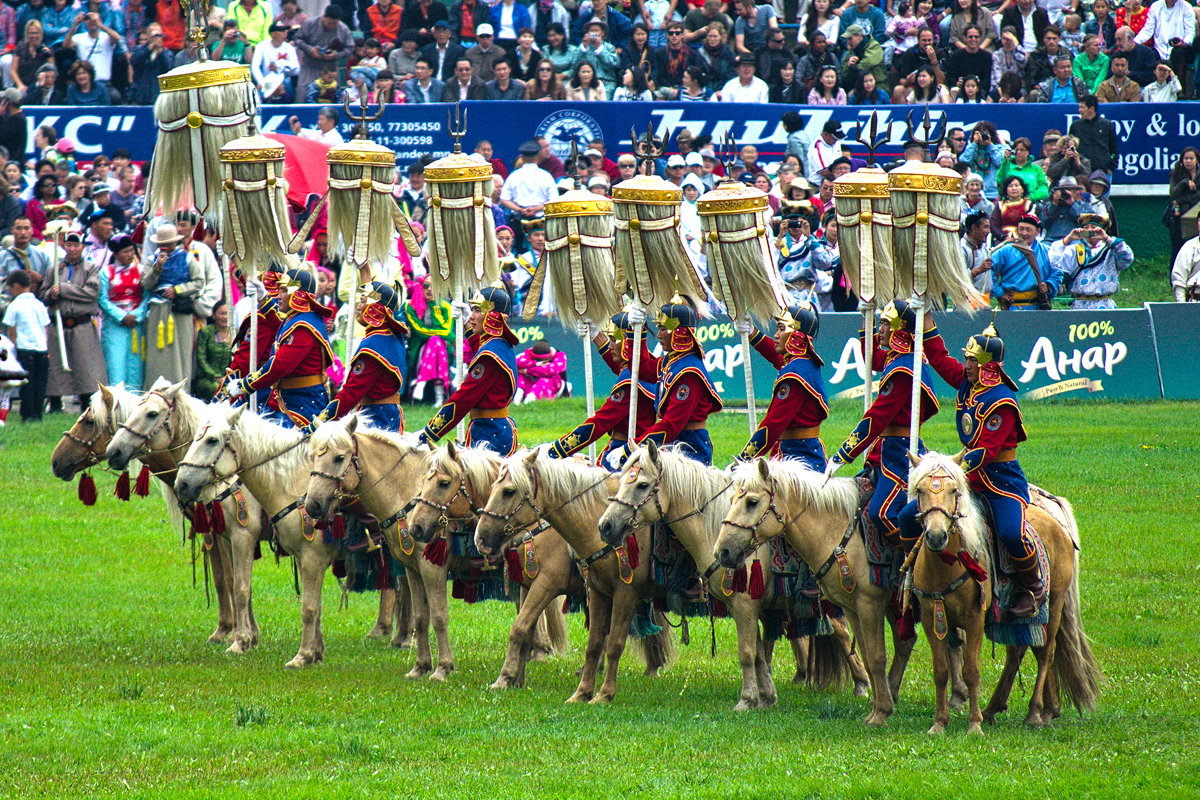
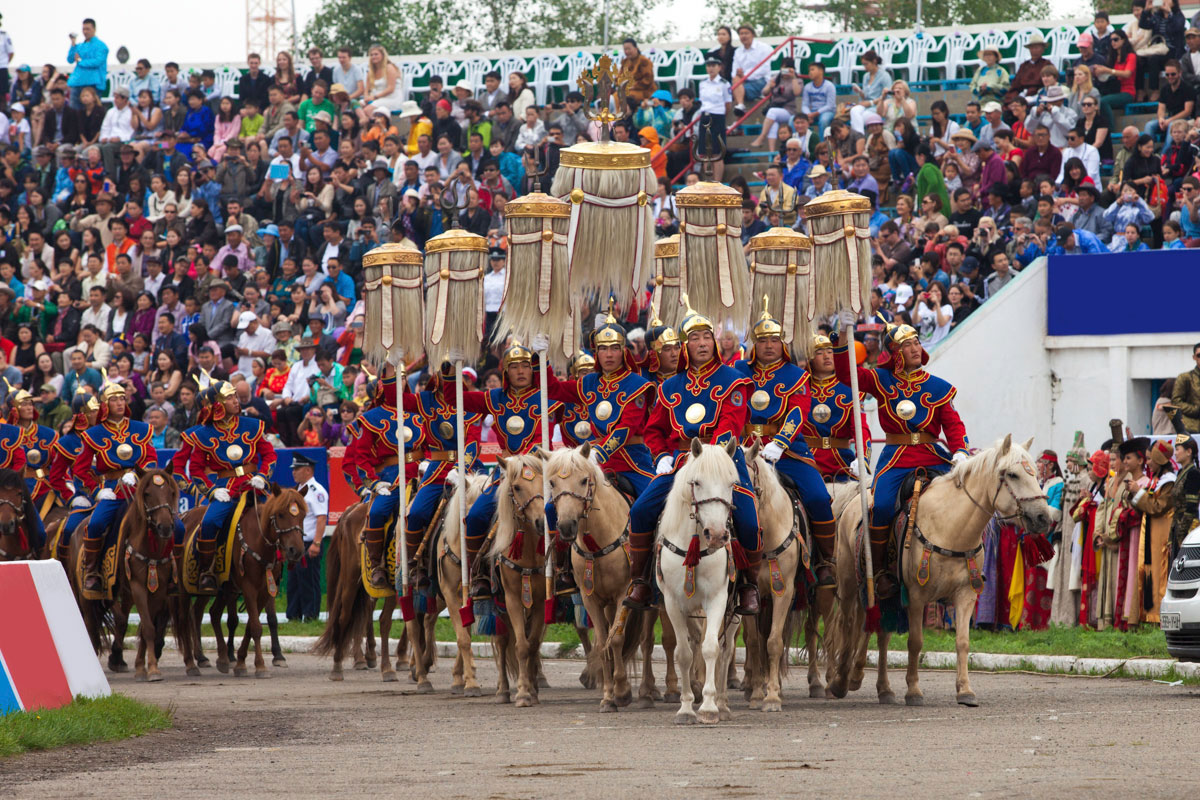
Wrestling, archery and horse-racing are the Three Games of Men, which are rooted in antiquity and continue to be very popular among the Mongols today.
Wrestling
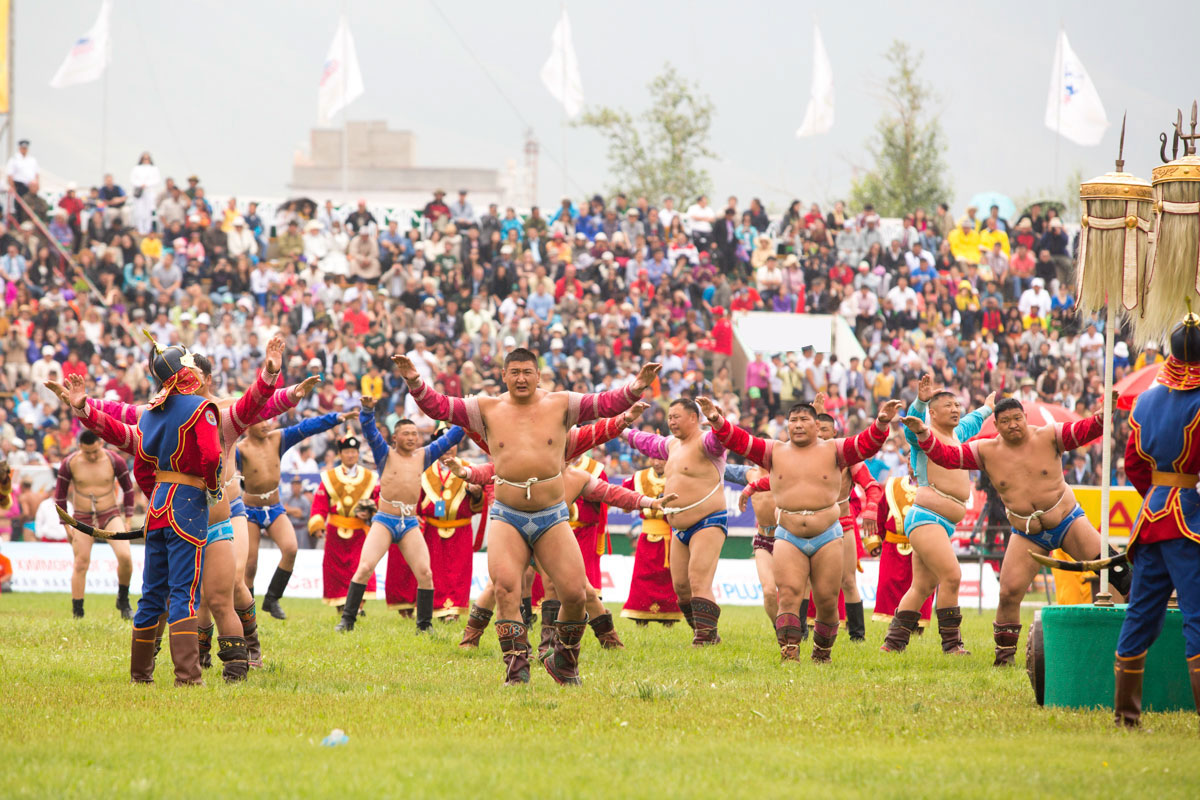
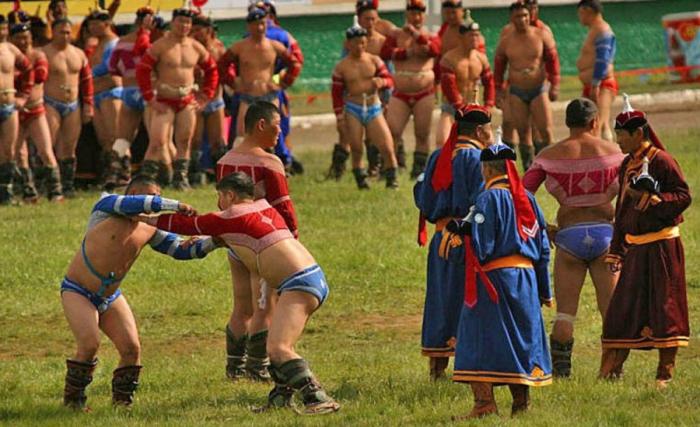
Wrestling is the most national and popular of all Mongol sports. It is the highlight of the Three Manly Games. Historians claim that Mongol-style wrestling originated some seven thousand years ago. Hundreds of wrestlers from different cities and aimags of the country take part in the national wrestling competition.
There are no weight categories or age limits. Each wrestler has his own attendant herald. The aim of the sport is to knock one's opponent off balance and throw him down, making him touch the ground with his elbow and knee. The winners are honoured with ancient titles: the winner of the fifth round gets an honorary title of nachin (falcon), of the seventh and eighth rounds zaan (elephant), and of the tenth and eleventh rounds arslan (lion). The wrestler who absolutes champion twice is awarded the title of avarga (Titan). Every subsequent victory at the national Naadam-festival will add an epithet to his avarga title, like "Invincible Titan", "Invincible Titan to be remembered by all" etc.
In 2003, the Mongolian parliament adopted a new law on Naadam, making amendments to some of the wrestling titles. The titles of Garudi and Hartsaga (Hawk) were added to the existing above-mentioned titles.
Horse-racing
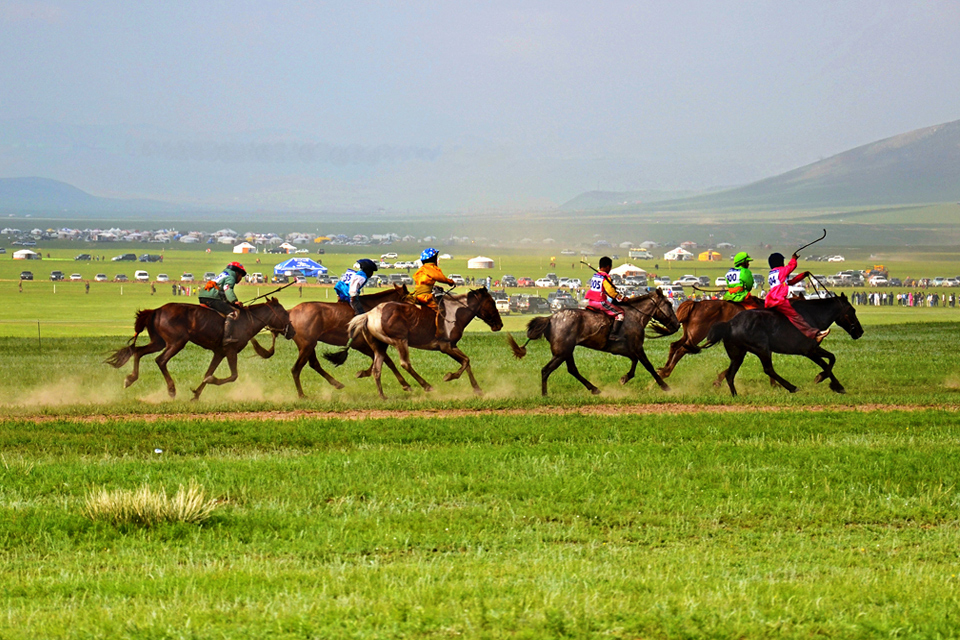
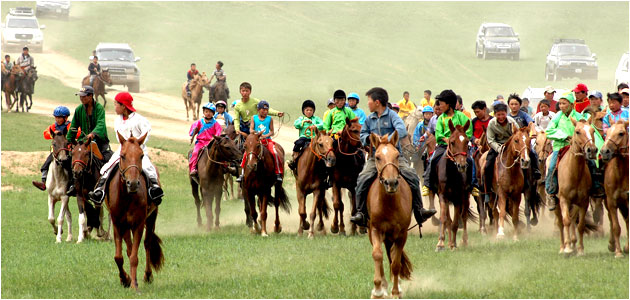
Horse racing is an important part of Naadam. This sport is also centuries old, dating back to the Bronze Age. Horses are divided into five groups: 2, 4 and 5 years old, over five years old and stallions. The riders are aged from 5 to Y. I. 12. Mongolian children are excellent riders as both girls and boys ride from infancy. As the popular saying goes "The nomad is born in the saddle".
Competitions are not held on special racetracks, but instead freely right across the steppe, where riders are confronted with various obstacles like rivers, ravines and hills. The distance varies according to the ages of horses, between 15 and 35 km.
The winners do a full circuit of the stadium, each accompanied by a herald. The winning horse receives the honorary title "Forehead of Ten Thousand Race Horse" and the five runners-up are awarded with medals. Interestingly enough, the loser is also rewarded and honoured.
Archery
Ample information about archery can be found in literary and historical documents of the 13th century and even before. According to historians, archery contests began in the 11th century.
The Mongols use a compound bow, built up of layers of horn, sinew, bark and wood. When unstrung, it is not straight, but curved. All archers adopt the same stance and posture. The target consists of a row several meters across, of small woven leather rings, some painted red, which are laid out laterally on the ground. The openings face upward, providing a challenging exercise in trajectory for the archers. The distance is about 75 meters for men and 60 for women; men shoot 40 arrows and must score not less than 15 points, women shoot 20 arrows to score at least 13 points using the same bow as the men. The one who scores the most points is the winner and the title of Mergen (Supermarksman) is bestowed on him or her.