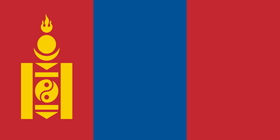
National Flag
The colours of the national flag are in keeping with age-old Mongolian symbolism. Red, the colour of fire, symbolizes prosperity and progress whilst blue, the colour of the sky, means eternity and peace. On the upper part of the flag is the Soyombo, the national symbol. The Soyombo emblem symbolizes Mongolia's freedom and independence. The Government of Mongolia is calling for every Mongolian family to have its own national flag and to raise it on national holidays as a symbol of sovereignty.
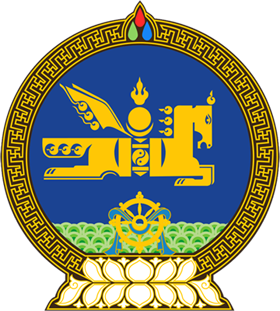
National Emblem
The National emblem shall be based on the white lotus of purity. The outer frame shall be the "Tumen Nasan" of eternity in the shape of a blue sphere symbolizing the eternal sky. In the centre shall be a combination of the Golden Soyombo and the Treasured Steed, an expression of the independence, sovereignty and spirit of Mongolia. In the upper part shall be placed the Chandmani which grants wishes and symbolizes the past, present and future.

Soyombo
Since ancient times, the Soyombo ideogram has been the national emblem of freedom and independence of the Mongols. At the top of the ideogram there is a flame, which symbolizes blossoming, revival, upgrading and continuation of the family. The three prongs of the flame signify the prosperity of the people in the past, the present and the future. The sun and the crescent are the sign of the flame, traditionally symbolize the origin of the Mongolian people. The combination of the flame, the sun and the crescent expresses the wish: May the Mongolian people live and prosper. The upside-down triangles at the top and bottom of the Soyombo are a general expression of the people's willingness to defend the freedom and independence of the country, while the rectangles are the symbols of honesty, justice and nobility. The fish, in Mongolian folklore, is a creature that never closes its eyes, i.e remains vigilant. The two fish in the emblem symbolize the unity of the people: men and women. The cumulative meaning is: May the whole people be united, wise and vigilant. The two vertical rectangles on the sides of the emblem signify fortress walls and are a graphic presentation of the ancient Mongolian saying: Two men in friendship are stronger than walls of stone.
Mongolian National Anthem
The national anthem was approved in 1950, to set music by the composer B. Damdinsuren. The procedure for the ceremonial use of the National symbols and the text and melody of the National Anthem shall be approved by law. On July 6, 2006, the lyrics were revised by the Mongolian Parliament to commemorate Genghis Khan.
Lyrics by: Ts.Damdinsuren Music by: B.Damdinsuren, L.Murdorj The National Anthem Our unwavering independent nation All Mongols' sacred ancestry All world's good deeds Always stable, forever continue With all honest nations of the world Strengthen our bonds With all our will and strength Let's develop our beloved Mongolia Our great nation's symbol blesses The peoples' fate supports Our ancestry, culture and language Let's forever cherish and prosper Bright peoples of brave Mongolia Have freedom and happiness Key to happiness, column for prosperity Our great country prosper