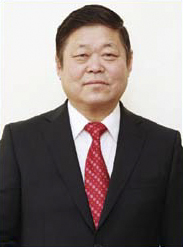
Byambadorj J.
National Human Rights Commission of Mongolia
5th floor, Government Building 11,
Independence Square, Chingeltei District,
Ulaanbaatar, Mongolia
Telephone: 262971, 262752, 262786, 262589
Fax: 976-51-262786,
E-mail: info@mn-nhrc.org
Web site: www.mn-nhrc.org
National Human Rights Commission
The State Great Hural (The Parliament of Mongolia) adopted the Law on the National Human Rights Commission of Mongolia on 7 December 2000. The National Human Rights Commission of Mongolia (NHRCM) is an independent organisation established in consistence with the "Paris Principles Relating to the Status of National Human Rights Institutions". The Commission is an institution mandated with the promotion and protection of human rights and charged with monitoring over the implementation of the provisions on human rights and freedoms provided in the Constitution of Mongolia, laws and international treaties of Mongolia.
- The Commission adheres to the following principles:
- Rule of Law
- Independence
- Protection of human rights and freedoms, legitimate interests of persons
- Justice
- Transparency
NHRCM consists of one Chief Commissioner and two other Commissioners, all appointed by the State Great Hural. NHRCM has nine full-time employees, including the Director and officers responsible for policy development, complaints handling, human rights education, international cooperation promotion and administrative support.
- The Commission has following the functions:
- Put forward recommendations and/or proposals on whether laws or administrative decisions are in conformity with the key human rights principles;
- Put forward proposals on the implementation of international human rights treaties and/or drafting of Government reports thereon;
- Conduct research on human rights issues
- Collaborate with international, regional and other national human rights institutions;
- Produce reports on the human rights situation in Mongolia;
- Increase public awareness about the laws and/or international treaties relating to human rights;
- Promote human rights education activities;
- Encourage ratification of and/or accession to the international human rights treaties;
- Accept and examine complaints concerning human rights grievances.